




Why Is the DC Tubular Motor Reshaping Modern Automated Shading and Door Systems?
In the rapidly evolving landscape of building automation and smart infrastructure, the demand for compact, energy-conscious, and noiseless drive solutions has never been higher. Architects, system integrators, and facility managers are progressively moving away from traditional AC-driven mechanisms toward more refined electromechanical cores. At the heart of this transformation lies the DC tubular motor, a technology that combines low-voltage operation, precise positioning, and silent performance. This article explores the engineering breakthroughs, application versatility, and global standardization trends surrounding this component, while also shedding light on how manufacturers align with modern safety and efficiency mandates.
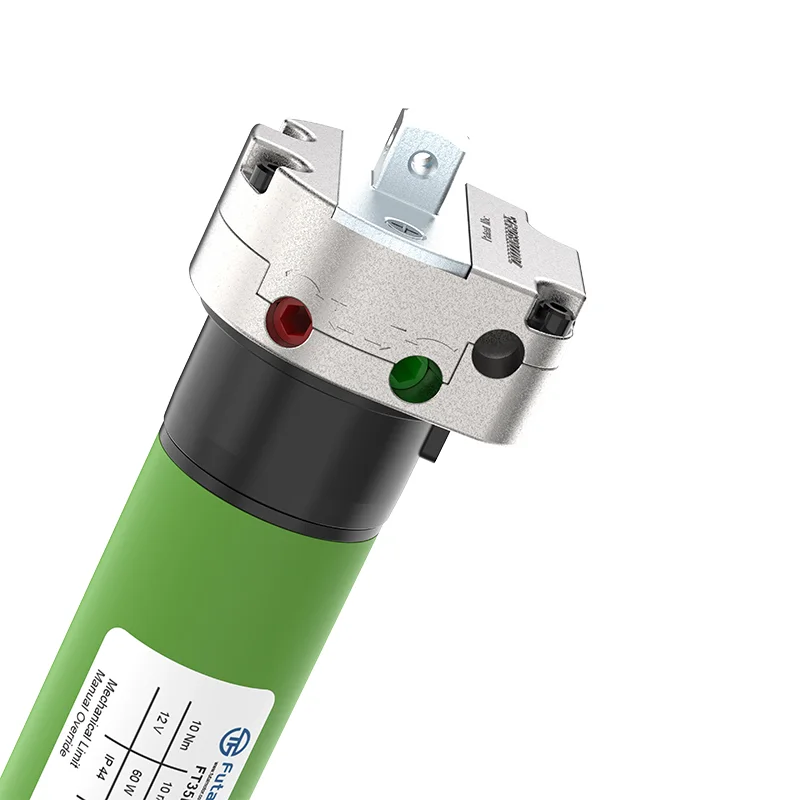
Core Advantages of Low-Voltage Tubular Drive Technology
The shift to direct-current tubular actuators is not merely an incremental improvement—it represents a fundamental rethinking of torque delivery and control architecture. Unlike conventional alternating current equivalents, these drives operate with brushless or advanced permanent-magnet configurations, offering superior start-stop behavior and reduced electromagnetic interference.
Energy Efficiency and Silent Operation
Modern building codes and green certification systems such as LEED and BREEAM encourage low standby power consumption. The DC tubular motor naturally fits this paradigm because it eliminates the need for transformers in many scenarios and can be directly powered by solar panels or battery storage. Furthermore, the absence of gearbox chatter and minimized vibration make it ideal for residential complexes, hospitals, and libraries where acoustic comfort is paramount.
Precision Control and Smart Integration
With the rise of IoT-enabled roller blinds, skylight systems, and sectional overhead doors, feedback loops require instantaneous response. Encoder-ready DC tubular designs offer absolute positioning accuracy, allowing synchronized multi-motor arrays for large-scale sunscreen installations. This level of controllability is almost unattainable with conventional AC motors without expensive external drives.
Key Market Sectors Driving Adoption
Several application domains have accelerated the deployment of these electromechanical actuators. Understanding where the tubular motor excels helps system designers select the appropriate torque and speed profiles. Residential automated roller shutters benefit greatly from whisper-quiet morning operations and programmable timers, which DC variants deliver natively. Commercial glass curtain wall sunshades often require dozens of synchronized units, where low-voltage bus communication reduces wiring complexity. Garage doors and industrial high-speed doors gain soft start/stop mechanics that prolong mechanical lifetimes and reduce stress on springs and guides. Roof window and skylight ventilation systems rely on weather-resistant DC actuators to provide reliable torque for lifting heavy glazing panels even during power fluctuations. Retractable screens and pergola systems use outdoor rated units with IP protection to ensure continuous operation under dust and moisture exposure.
Technical Comparison: DC Tubular Motor vs. AC Tubular Motor
To illustrate the distinct performance characteristics, the following table outlines operational differences without referencing numerical values. Each parameter reflects industry-standard comparisons.
| Feature Aspect | DC Tubular Motor Architecture | Traditional AC Tubular Motor |
|---|---|---|
| Power Source Compatibility | Low-voltage direct current (battery / solar / rectified supply) | Mains alternating current (requires dedicated circuit) |
| Noise Emission During Run | Minimal – suitable for noise-sensitive environments | Audible hum and gear train noise typical |
| Speed Regulation Method | PWM or constant voltage with smooth ramping | Typically limited to tapped windings or external inverter |
| Position Feedback Capability | Hall sensors / magnetic encoder integration standard | Often requires limit switches or add-on modules |
| Emergency Operation | Can be directly connected to battery backup for fail-safe | Requires UPS system with DC-AC conversion |
| Typical Application Voltage Range | Low-voltage class (safe for smart home integration) | Line voltage (requires professional installation) |
Global Regulatory and Safety Compliance for Low-Voltage Actuators
When specifying these drive units, engineers must verify conformity with international safety and electromagnetic compatibility standards. The most common certifications include ISO directives for quality management, low-voltage directive compliance, and environmental hazard substance restrictions. Reputable manufacturing partners ensure their DC tubular motor range carries marks such as CE, TUV, and RoHS, signifying rigorous testing for insulation, temperature rise, and endurance cycles. Additionally, for products sold in North American markets, UL recognition or equivalent third-party validation is often required for building code acceptance.
Understanding Duty Cycles and Thermal Protection
One of the critical design considerations is the motor’s nominal operating period. Modern DC tubular drives are rated for intermittent or continuous use depending on the application (e.g., sunshade tracking vs. occasional shutter movement). Built-in thermal sensors prevent winding damage if the unit is overloaded. System integrators should always match the torque curve and runtime expectations to the intended fabric or door weight, avoiding premature wear.
Installation and Wiring Best Practices
Unlike AC motors that require line voltage cabling with heavy conduits, low-voltage DC systems allow more flexible routing. Nonetheless, correct polarity, wire gauge selection based on length, and proper grounding remain essential. For large projects with multiple axes, decentralized controllers using RS485 or wireless mesh protocols reduce installation labor. Many modern DC tubular actuators come with plug-and-play connectors and limit-learning buttons, simplifying field commissioning. Always verify that the power supply unit provides regulated voltage and sufficient current overhead for simultaneous starts. Use shielded cables when running motor lines alongside data or antenna cables to avoid induced noise. For outdoor applications such as awnings and pergola blinds, select motors with minimum IP44 or higher ingress protection. Program electronic limits carefully to avoid mechanical stress at end stops, prolonging gearbox life.
Emerging Trends: Wireless Control and Solar Readiness
The convergence of photovoltaic technology and battery storage has opened new frontiers for self-sustaining shading networks. A tubular motor can be directly coupled to a small solar panel and a rechargeable battery pack, creating a net-zero operating solution for remote structures or skylight windows. With the addition of wireless modules such as Zigbee, Z-Wave, or BLE, occupants can manage dozens of window coverings via voice assistants or occupancy sensors. This synergy not only reduces building energy consumption but also enhances user comfort through automated daylight harvesting.
Predictive Maintenance and Diagnostics
Advanced models now embed non-volatile memory to log run hours, overload events, and stall occurrences. Facility managers can retrieve this data via mobile applications to schedule proactive servicing. This shift from reactive to predictive maintenance reduces downtime for hotels, office towers, and public buildings. When evaluating suppliers, inquire about diagnostic interface capabilities and protocol openness such as MODBUS or KNX.
Case Example: Integration in Roof Window and Ventilation Systems
One of the most demanding scenarios for any tubular actuator is the vertical lifting of insulated roof windows. Here, the motor must overcome gravity while maintaining smooth motion and safety stop functions in case of rain sensors. Low-voltage DC designs excel because they allow direct interface with electronic control units that process weather station inputs. Without stepping through numeric figures, installation feedback indicates that maintenance intervals extend significantly when compared to older AC chain actuators, due to reduced mechanical shock.
Selecting the Right Drive for Rolling Shutters and Grilles
Rolling shutters in storefronts and warehouses require high starting torque and reliable braking. The tubular motor family offers permanent magnetic braking, which holds the curtain securely without continuous power draw. This feature also ensures that in case of power loss, the shutter does not free-fall. For high-cycle applications like parking garages, reinforced bearings and stainless steel output shafts are recommended. Many international projects now specify low-voltage drives for their inherent safety during maintenance — technicians can handle wiring without high-voltage risks.
Environmental Considerations and Material Compliance
Sustainability mandates are driving manufacturers to eliminate hazardous substances such as lead, mercury, and certain phthalates. The Restriction of Hazardous Substances (RoHS) directive is a baseline requirement for the European market. Moreover, end-of-life recyclability is improved when motors use separable copper windings and steel housings. Leading producers of the DC tubular motor also adopt energy-efficient production methods and low-waste packaging. For green building projects, requesting an Environmental Product Declaration can add credibility to the specification.
Quality Assurance and Manufacturing Standards
The production of precision tubular actuators demands close tolerance control over stator alignment, magnet fixation, and planetary gear assembly. Manufacturers adhering to ISO9001 demonstrate systematic process control, from incoming raw material inspection to final dynamometer testing. In addition, random sample life tests ensure that the motor endures thousands of reverse cycles without performance degradation. Audits of the supply chain, including rare earth magnet sourcing and electronic component traceability, further distinguish reliable suppliers from generic alternatives.
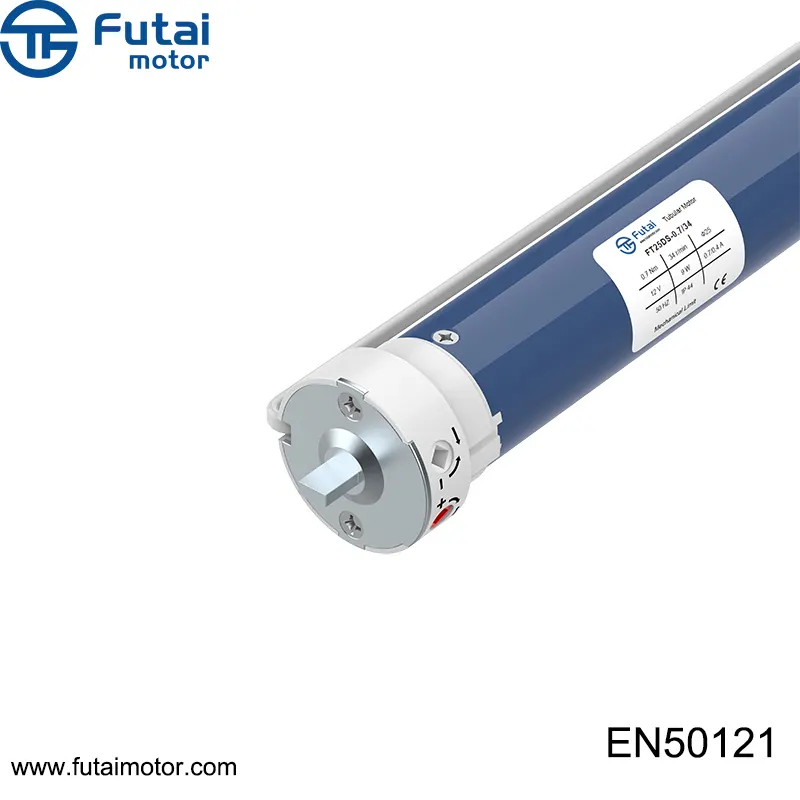
Future Outlook: Integrated Electronics and Edge Computing
As the Internet of Things permeates every building subsystem, the tubular drive is evolving into an intelligent node. On-board microcontrollers can now memorize several dozen position presets, analyze torque ripple to detect fabric tears, and even communicate with building management systems via secure API calls. This means that a single DC tubular motor can serve not only as a motion generator but also as a data source for predictive algorithms. Over the next several years, the line between actuator and sensor will blur, unlocking new energy-saving strategies like automatic blind adjustment based on indoor temperature mapping.
Integration with Fire Safety and Emergency Systems
For smoke exhaust skylights and fire curtain applications, reliability under extreme conditions is non-negotiable. DC tubular drives with emergency battery backup ensure that vents open even when mains power fails. Additionally, some designs incorporate manual override cranks for firefighter access. Certifications like EN 12101 or equivalent local norms should be requested for life-safety related installations.
Global Market Reach and Supply Chain Considerations
Automation component distributors and facade contractors seek partners capable of delivering consistent lead times and technical documentation in multiple languages. With increasing demand across Europe, the Americas, the Middle East, Southeast Asia, and Australia, manufacturers must maintain regional stock and application engineering support. The ability to customize shaft lengths, brake holding torque, and connector types is often a deciding factor for large-scale architectural projects. A trusted supplier will provide detailed dimensional drawings, wiring schematics, and troubleshooting guides.
Addressing Common Misconceptions
Some speculators still believe that low-voltage motors cannot generate sufficient torque for heavy industrial doors or large external blinds. However, modern rare-earth magnet technology and optimized gear ratios allow tubular motors to rival or exceed AC counterparts in nominal torque output. The key is proper sizing based on load, tube diameter, and duty cycle. Another misconception is that DC motors require more frequent maintenance — in fact, brushless designs eliminate carbon brush wear, dramatically increasing service intervals.
Practical Recommendations for System Integrators
Always request torque-speed curves from the manufacturer to confirm suitability. Select motor diameters such as 35mm, 45mm, or 59mm according to available installation tube space. Consider radio frequency interference if installing dozens of motors in close proximity — opt for models with built-in EMC filters. Evaluate the availability of standardized mounting brackets and accessories to reduce fabrication time. Check warranty terms, especially for outdoor-rated units exposed to temperature swings and humidity.
Innovation Spotlight: Safety Contact Edge Integration
Modern automatic door and gate systems increasingly incorporate safety edges that send a stop or reverse signal upon obstruction detection. A sophisticated DC tubular motor control board can directly interface with resistive or optical safety edges without external relays. This integration streamlines wiring and improves response time—vital for pedestrian doors and garage gates. When evaluating suppliers, ask about native safety edge input ports and configuration software that adjusts sensitivity according to application risk levels.
Why Ningbo Futai Window and Door Automation Technology Co., Ltd Stands Out
In a competitive field of motion control manufacturers, the company headquartered in Ningbo, Zhejiang, China—Ningbo Futai Window and Door Automation Technology Co., Ltd—has distinguished itself through rigorous adherence to the principles of science and technology. Their management ethos, embodied by “sincerity, harmony, creativity,” guides every stage from concept to after-sales service. The firm’s manufacturing philosophy — “fine, precise, beautiful” — translates into high-end automatic motors, operators, safety contact edges, and control devices for a diverse range of doors, gates, and windows.
The organization continuously innovates across product lines, including the development of motors for window and door systems as well as sun protection products. Their portfolio encompasses solutions for shutters, screens, awnings, roof windows, garage doors, and roller blinds. Each component undergoes stringent testing to earn globally recognized approvals including ISO9001, CE, TUV, and RoHS. With a strong export footprint covering Europe, the United States, the Middle East, South America, Australia, and Southeast Asia, Ningbo Futai demonstrates that a commitment to quality and customer-centric engineering yields lasting partnerships. For specifiers and project managers seeking reliable low-voltage drive solutions, this manufacturer represents a proven ally in the ever-evolving world of automated closure systems.
Send Inquiry



X
We use cookies to offer you a better browsing experience, analyze site traffic and personalize content. By using this site, you agree to our use of cookies.
Privacy Policy